City Towing Asks a Lot More Than Distance
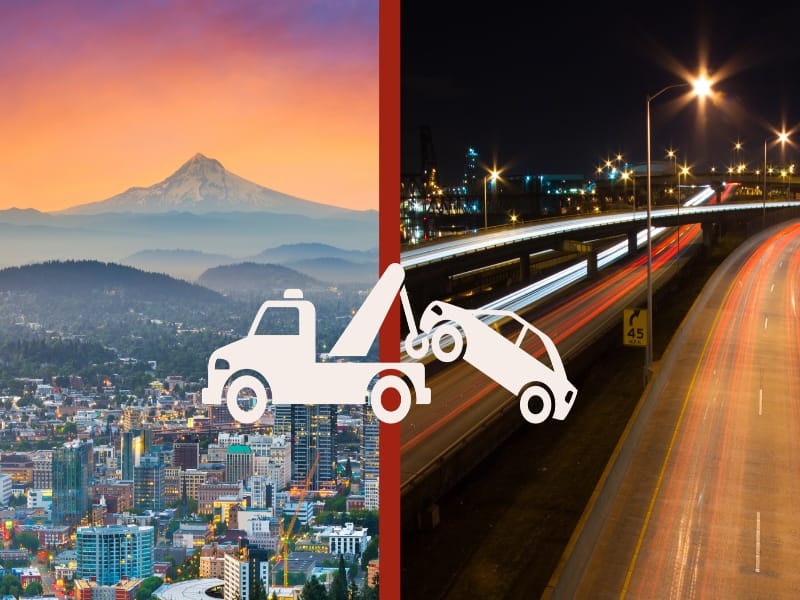
Portland’s road network is one of the more varied in the Pacific Northwest: quiet residential blocks, busy commercial corridors, and a highway system that carries serious freight and commuter traffic year-round. A tow call in a neighborhood like Laurelhurst looks almost nothing like a call on I-205 at rush hour, and knowing how to handle both is what separates a capable towing operation from one that is only ready for the easy jobs. As a Laurelhurst towing provider working in and around Portland, we see that contrast on a daily basis.
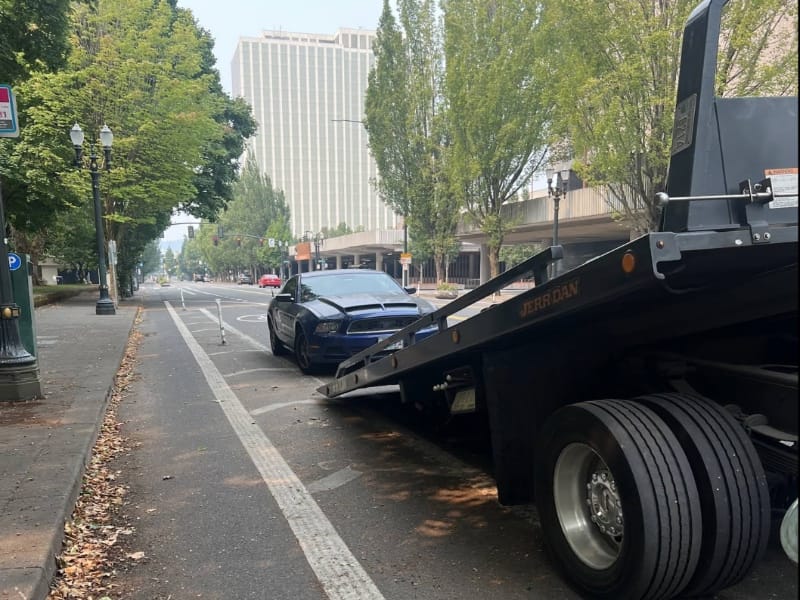
City recovery is fundamentally a spatial problem. The tow itself is rarely the complicated part: it is the positioning, the traffic management, the overhead clearances, and the occupied parking lanes that make a city job genuinely challenging. Our operators spend a substantial portion of a city call reading the environment before making any move, because one misjudged angle on a narrow residential street means the whole approach has to start over.
Highway Calls Change the Risk Profile Immediately
Once a towing call comes in from a high-speed corridor, the nature of the job shifts from spatial to situational. Our crew is now working in an environment where approaching traffic moves faster than most drivers can react to, and where the consequences of a mistake are far more serious. We use HAAS Safety Cloud on every highway job, delivering real-time alerts to approaching drivers and giving our operators a measurable increase in roadside protection. Getting the scene safe before anything else happens is the standard, and it has been from day one.
Highway calls also tend to involve heavier loads and longer response drives than city calls. Damaged commercial vehicles, rollover recoveries, and vehicles that have left the roadway entirely all require equipment and rigging configurations that simply are not practical for a compact city unit. Our fleet is staged to handle both, and our Laurelhurst towing team brings that full range of capability to every dispatch.
How Speed Changes What Our Operators Think About First
On a city call, our crew can manage slow-moving traffic and work at a deliberate pace. On a highway, a car traveling at speed with an inattentive driver can reach a scene in seconds, and our operators know this better than anyone. Lane positioning, lighting deployment, and approach angles are all determined by the speed environment long before the hook goes on. This shift in thinking is one of the more consequential differences between Laurelhurst towing work and highway operations.
What a Well-Staged Truck Carries for Each Setting
The right equipment for a city recovery and the right equipment for a highway recovery look different on the truck. City jobs lean on:
- Compact wheel-lift units that work in tight spaces
- Short-wheelbase trucks suited to residential streets
- Standard lighting configurations
Highway jobs call for:
- Flatbeds for high-damage and all-wheel-drive vehicles
- Extended boom reach for off-road and embankment recoveries
- Enhanced lighting packages for high-speed roadside work
- Heavy-duty rigging for large commercial loads
Carrying both configurations and knowing when to use each one is part of what makes a Laurelhurst towing response effective across every environment we operate in.
Newhouse Towing: The Laurelhurst Towing Team Portland Has Relied on Since 1937
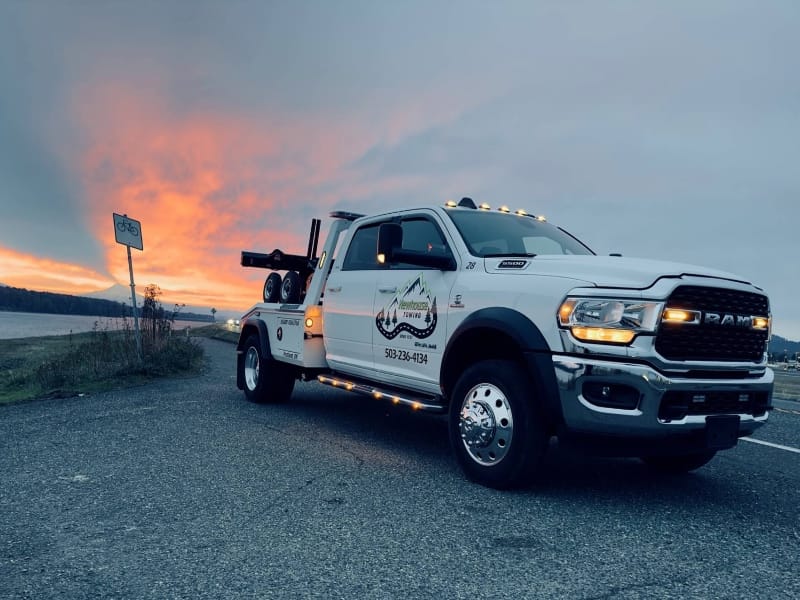
Newhouse Towing has been serving the Portland area since 1937, and Laurelhurst towing has been part of our territory for the full run. Our crew knows these streets and highways the way only a multi-generational company can. From close-quarters residential recoveries on Portland’s
Call us and our nearest unit starts moving toward you. Our operators stay current on safety regulations, we run Safety Cloud on every highway job, and every Laurelhurst towing call gets the same level of preparation we give to a major freeway recovery.
FAQ
What is the first thing a tow truck driver does when arriving on scene?
The first priority is always scene safety: assessing the surrounding traffic, positioning the truck to protect both the stranded vehicle and the operator, and getting lights deployed before anything else. The actual hookup comes after the scene is under control.
How does traffic speed affect the way a tow truck operator works?
Higher traffic speed compresses the time available to react to hazards, so operators on highway calls prioritize lighting, lane positioning, and quick hookup configurations. City work allows more time for careful repositioning and deliberate rigging.
Do towing companies charge different rates for highway calls versus city calls?
Pricing structures vary by company. Some charge a flat rate regardless of location, while others factor in mileage or job complexity. Asking upfront about the rate structure before the truck rolls avoids surprises when the invoice arrives.
What should I do while waiting for a tow truck on a busy road?
Turn hazard lights on immediately, move the vehicle as far off the travel lane as possible, and stay away from the traffic side once you are out of the car. If you have reflective triangles or flares, place them behind the vehicle to give approaching drivers more warning distance.
How do towing companies decide which type of truck to send?
Dispatch asks about the vehicle type, its condition, and the location. A sedan on a residential street calls for a different unit than a commercial truck on a highway shoulder, and good dispatch matches the equipment to the job before leaving the yard.